Chronic kidney disease
Chronic kidney disease occurs when one suffers from gradual and usually
permanent loss of kidney function over time. This happens gradually, usually
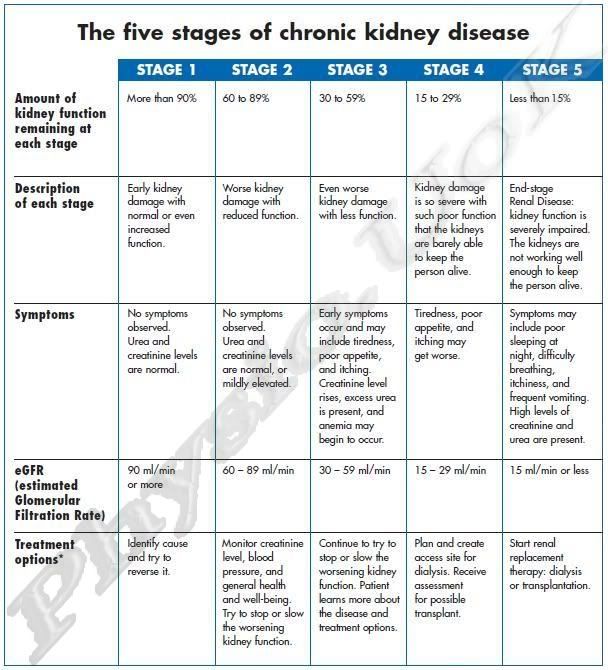
months to years. Chronic kidney disease is divided into five stages of
increasing severity (see Table 1 below). The term "renal" refers to
the kidney, so another name for kidney failure is "renal failure."
Mild kidney disease is often called renal insufficiency.
With loss of kidney function, there is an accumulation of water; waste; and toxic
substances, in the body, that are normally excreted by the kidney. Loss of
kidney function also causes other problems such as anemia, high blood pressure,
acidosis (excessive acidity of body fluids), disorders of cholesterol and fatty
acids, and bone disease.
Stage 5 chronic kidney disease is also referred to as kidney failure,
end-stage kidney disease, or end-stage renal disease, wherein there is total or
near-total loss of kidney function. There is dangerous accumulation of water,
waste, and toxic substances, and most individuals in this stage of kidney
disease need dialysis or transplantation to stay alive.
Unlike chronic kidney disease, acute
kidney failure develops rapidly, over days or weeks.
- Acute kidney failure
usually develops in response to a disorder that directly affects the
kidney, its blood supply, or urine flow from it.
- Acute kidney failure is
often reversible, with complete recovery of kidney function.
- Some patients are left with
residual damage and can have a progressive decline in kidney function in
the future.
- Others may develop
irreversible kidney failure after an acute injury and remain
dialysis-dependent.
Table 1. Stages of Chronic Kidney Disease
Stage
|
Description
|
GFR*
mL/min/1.73m2
|
1
|
Slight kidney damage with normal or increased filtration
|
More than 90
|
2
|
Mild decrease in kidney function
|
60-89
|
3
|
Moderate decrease in kidney function
|
30-59
|
4
|
Severe decrease in kidney function
|
15-29
|
5
|
Kidney failure
|
Less than 15 (or dialysis)
|
*GFR is glomerular filtration rate, a measure of the kidney's function.
Table : 2 Also showing Five Stages of Chronic Kidney Disease
Chronic Kidney Disease Causes
Although chronic kidney disease sometimes results from primary diseases of
the kidneys themselves, the major causes are diabetes and high blood pressure.
- Type
1 and type 2 diabetes mellitus cause a condition called diabetic
nephropathy, which is the leading cause of kidney disease in the United States.
- High
blood pressure (hypertension), if not controlled, can damage the
kidneys over time.
- Glomerulonephritis is the
inflammation and damage of the filtration system of the kidneys, which can
cause kidney failure. Postinfectious conditions and lupus
are among the many causes of glomerulonephritis.
- Polycystic
kidney disease is an example of a hereditary cause of chronic kidney
disease wherein both kidneys have multiple cysts.
- Use of analgesics such as acetaminophen
(Tylenol) and ibuprofen
(Motrin, Advil) regularly over long durations of time can cause analgesic
nephropathy, another cause of kidney disease. Certain other medications
can also damage the kidneys.
- Clogging and hardening
of the arteries (atherosclerosis) leading to the kidneys causes a
condition called ischemic nephropathy, which is another cause of
progressive kidney damage.
- Obstruction of the flow of
urine by stones, an enlarged
prostate, strictures (narrowings), or cancers may also cause kidney
disease.
- Other causes of chronic
kidney disease include HIV
infection, sickle
cell disease, heroin
abuse, amyloidosis, kidney
stones, chronic
kidney infections, and certain cancers.
If you have any of the following conditions, you are at higher-than-normal
risk of developing chronic kidney disease. Your kidney functions may need to be
monitored regularly.
- Diabetes mellitus type 1 or
2
- High blood pressure
- High
cholesterol
- Heart
disease
- Liver
disease
- Amyloidosis
- Sickle cell disease
- Systemic Lupus
erythematosus
- Vascular diseases such as
arteritis, vasculitis,
or fibromuscular dysplasia
- Vesicoureteral reflux (a
urinary tract problem in which urine travels the wrong way back toward the
kidney)
- Require regular use of
anti-inflammatory medications
- A family history of kidney
disease
How Common is Chronic Kidney Disease?
- Chronic kidney disease is a
growing health problem. A report by the Centers for Disease Control (CDC)
determined that 16.8% of all adults above the age of 20 years have chronic
kidney disease. Thus, one in six individuals has kidney disease. By disease
stage, the prevalence is as follows:
- stage 1, 3.1%;
- stage 2, 4.1%;
- stage 3, 7.6%;
- stage 4; and
- stage 5, 0.5%.
- There are over 500,000
persons on dialysis or who have received kidney transplants.
- The prevalence of chronic
kidney disease has increased by 16% from the previous decade. The
increasing incidence of diabetes mellitus, hypertension (high blood
pressure), obesity,
and an aging population have contributed to this increase in kidney
disease.
- Chronic kidney disease is
more prevalent among individuals above 60 years of age (39.4%).
- Kidney disease is more
common among Hispanic, African American, Asian or Pacific Islander, and
Native American people.
Chronic Kidney Disease Symptoms
The kidneys are remarkable in their ability to compensate for problems in
their function. That is why chronic kidney disease may progress without
symptoms for a long time until only very minimal kidney function is left.
Because the kidneys perform so many functions for the body, kidney disease
can affect the body in a large number of different ways. Symptoms vary greatly.
Several different body systems may be affected. Notably, most patients have no
decrease in urine output even with very advanced chronic kidney disease.
Effects and symptoms of chronic kidney disease include;
When to Seek Medical Care
Several signs and symptoms may suggest complications of chronic kidney
disease. Call your health care practitioner if you notice any of the following
symptoms:
- Change in energy level or
strength
- Increased water retention
(puffiness or swelling) in the legs, around the eyes, or in other parts of
the body
- Shortness of breath or
change from normal breathing
- Nausea or vomiting
- Lightheadedness
- Severe bone or joint pain
- Easy bruising
- Itching
If you have diabetes, high blood pressure, or kidney problems, see your
health care practitioner right away if you know or suspect that you are
pregnant.
See your health care practitioner as recommended for monitoring and
treatment of chronic conditions such as diabetes, high blood pressure, and high
cholesterol.
The following signs and symptoms represent the possibility of a severe
complication of chronic kidney disease and warrant a visit to the nearest
hospital emergency department.
- Change in level of
consciousness - extreme sleepiness or difficult to awaken
- Fainting
- Chest pain
- Difficulty breathing
- Severe nausea and vomiting
- Severe bleeding (from any
source)
- Severe weakness
Chronic Kidney Disease Treatment
Self-Care at Home
Chronic kidney disease is a disease that must be managed in close
consultation with your health care practitioner. Self-treatment is not
appropriate.
- There are, however, several
important dietary rules you can follow to help slow the progression of
your kidney disease and decrease the likelihood of complications.
- This is a complex process
and must be individualized, generally with the help of your health care
practitioner and a registered dietitian.
The following are general dietary guidelines:
- Protein restriction:
Decreasing protein intake may slow the progression of chronic kidney
disease. A dietitian can help you determine the appropriate amount of protein
for you.
- Salt restriction:
Limit to 4-6 grams a day to avoid fluid retention and help control high
blood pressure.
- Fluid intake:
Excessive water intake does not help prevent kidney disease. In fact, your
doctor may recommend restriction of water intake.
- Potassium restriction:
This is necessary in advanced kidney disease because the kidneys are
unable to remove potassium. High levels of potassium can cause abnormal
heart rhythms. Examples of foods high in potassium include bananas,
oranges, nuts, and potatoes.
- Phosphorus restriction:
Decreasing phosphorus intake is recommended to protect bones. Eggs, beans,
cola drinks, and dairy products are examples of foods high in phosphorus.
Other important measures that you can take include:
In chronic kidney disease, several medications can be toxic to the kidneys
and may need to be avoided or given in adjusted doses. Among over-the-counter medications,
the following need to be avoided or used with caution:
- Certain analgesics: Aspirin;
nonsteroidal antiinflammatory drugs (NSAIDs, such as ibuprofen
[Motrin, for example])
- Fleets
or phosphosoda enemas because of their high content of phosphorus
- Laxatives and antacids
containing magnesium and aluminum such as magnesium
hydroxide (Milk of Magnesia) and famotidine
(Mylanta)
- Ulcer medication
H2-receptor antagonists: cimetidine
(Tagamet), ranitidine
(Zantac), (decreased dosage with kidney disease)
- Decongestants such as pseudoephedrine
(Sudafed) especially if you have high blood pressure
- Alka Seltzer, since this
contains large amounts of salt
- Herbal medications
If you have a condition such as diabetes, high blood pressure, or high
cholesterol underlying your chronic kidney disease, take all medications as
directed and see your health care practitioner as recommended for follow-up and
monitoring.
Control Your Blood Pressure — keep your blood pressure below
130/85 (adults) with weight loss and exercise, a low sodium/low fat
diet, reducing stress, and taking your blood pressure medication
correctly. For some patients, the target blood pressure is lower
(125/75). Controlling high blood pressure may delay the progression of
kidney disease by slowing damage to the kidneys.
Ask Your Doctor About Anemia — Anemia—a shortage of red blood
cells—starts very early in kidney failure. Anemia can cause you to feel
tired and worn out, and can damage your heart. Heart disease is the
leading cause of death in people with kidney problems. Ask your doctor
about medications such as epoetin (
EPO) and iron to treat anemia.
Control Your Blood Sugar Levels — if you have diabetes, stay at a
healthy weight, exercise, and take medications as prescribed to keep
your blood glucose in the "normal" range. Tight control of blood sugar
can help slow the progression of kidney disease. Your HbA1c levels,
which measure your blood sugar control over a period of 3 months, should
be less than 6.5%.
Exercise — with your doctor's permission, start a regular
exercise program to control weight and keep your heart healthy and blood
vessels working as well as possible. It is very important to keep your
muscles and joints in good working order. Although written for people on
dialysis,
Exercise: A Guide for People on Dialysis has useful information to help anyone with a chronic illness increase physical activity.
Chronic Kidney Disease Prevention
Chronic kidney disease cannot be prevented in most situations. You may be
able to protect your kidneys from damage, or slow the progression of the
disease by controlling your underlying conditions such as diabetes mellitus and
high blood pressure.
- Kidney disease is usually
advanced by the time symptoms appear. If you are at high risk of
developing chronic kidney disease, see your health care practitioner as
recommended for screening tests.
- If you have a chronic
condition such as diabetes, high blood pressure, or high cholesterol,
follow the treatment recommendations of your health care practitioner. See
your healthcare practitioner regularly for monitoring. Aggressive
treatment of these diseases is essential.
Avoid exposure to drugs especially NSAIDs (nonsteroidal antiinflammatory
drugs), chemicals, and other toxic substances as much as possible.
ommended for follow-up and monitoring.